
Case study
Package delivery, applied toOrgan transplantation
TransNet: package-delivery labeling, applied to organ transplantation
How going to see 69+ organ recoveries led to printed, scanned organ labels, in use at every US organ procurement organization by June 2017.
At a glance
- Prototype in four months. Field testing in nine.
- Visual and audible verification checks in the labeling workflow: 62 to 7.
- In 199 field-test surveys, 89% of users rated TransNet as safe as or safer than handwritten labels.
- In use at every US organ procurement organization by June 2017.
The problem
Donated organs were labeled by hand and checked by eye, many times over. The checks were there for safety. Each one also took time, and every handwritten entry was one more chance for a transcription error.
HRSA set out to reduce national patient-safety risks in organ labeling, packaging, transport and tracking, and it looked outside healthcare for help. In the words of the HHS Office of the CTO, “HRSA teamed up with the EIR Program to recruit an entrepreneur and logistics expert from the United Parcel Service.” I was selected through the HHS Entrepreneurs program, sponsored by Secretary Sebelius and the HHS CTO, and served as HRSA’s project lead in its Division of Transplantation.
The fix had to work for every US organ procurement organization (OPO), each one independent, and for the transplant centers that receive the organs.
What I found by going to look
I started in the field. I partnered with a UNOS analyst trusted across the OPTN, so teams would show me the real process. Over the project, I observed 69+ organ recoveries, some in 30- to 36-hour stretches, and visited 14 organ procurement organizations and about 19 transplant centers.
Going to look changed the problem. Of nine problem areas, two were identified at the start. The other seven surfaced during field discovery.
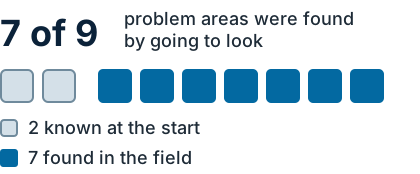
One finding reshaped the design: label problems seen in the operating room often started upstream. So the work covered the whole recovery, labeling and packaging workflow, not only the moment a label was written. How I work shows what the project assumed at the start, and what the field showed instead.
What I borrowed, and from where

- Package delivery. Print the label from system data instead of writing it by hand, and scan it at handoffs.
- Industrial engineering. Time standards. From my own time studies, using UPS work-measurement methods, I designed a timed training simulation and its certification requirements. Trainees set up the equipment and labeled the donor, three organs, blood, lymph nodes, documents and every box in under 19 minutes.
- Lean. Remove waste: fewer manual checks, with safety kept in place.
- Lean Startup. Build fast and learn in the field: a prototype in four months, and field testing in nine.
- Simulation and FMEA. Find the failure points first, then test in simulation.
Simple on purpose
The equipment stayed simple: a tablet and a portable printer. GPS and RFID were evaluated, and scan events were chosen, to create a low barrier to entry. I selected the tablets and printers, persuaded vendors to donate the initial equipment, and revised the design as beta-test findings came in.
What changed
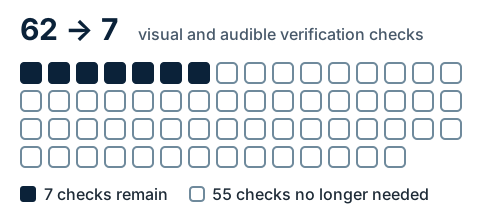
- Visual and audible verification checks in the labeling workflow fell from 62 to 7. The data was checked once, at entry, so the repeated checks downstream were no longer needed.
- In 199 field-test surveys, 89% of users rated TransNet as safe as or safer than handwritten labels.
- Use was voluntary at first. The threshold set before use became required was 80% voluntary adoption.
- Once it was reached, a date was set: use was required from June 2017, and by then every US organ procurement organization was using TransNet.

Who made it work
TransNet succeeded because of HHS sponsorship, HRSA funding, UNOS as a day-to-day partner in development, training and field access, and the OPOs and transplant centers that opened their operations.
Getting it adopted
TransNet asked every OPO to change a familiar process used on every organ recovery. I led that change with UNOS, testing the design with OPO staff in the field and revising it as their findings came in.
- Tested where it would be used. Field testing came before any national rollout.
- Voluntary first. Use was voluntary at first. The OPTN Operations and Safety Committee set 80% voluntary adoption as the threshold before use became required. Once it was reached, a date was set, and use was required from June 2017. By then, every US organ procurement organization was using TransNet.
- Training was practice, not a demo. I designed the timed simulation and its certification requirements: the equipment setup, the process steps and the completion time. Trainees passed only if they finished in time using the trained methods, checked on a checklist. A UNOS lead and I led the workshops, and the UNOS Learning and Development team supported them with training and certification resources and by scheduling the OPO participants.
- Easy to start. A tablet and a portable printer were all an OPO needed. I also helped 9 transplant centers get equipment and set up.
- Leaders kept informed. I led the project’s Innovation Summit, and briefed HHS, HRSA, FDA, CMS and OPTN committees, including two presentations to HHS Secretary Kathleen Sebelius.
Handing it off
Development, training and support moved to UNOS, so TransNet would last beyond the project.
What carries over today
The tools have changed. The pattern hasn’t. Today the manual step worth removing is often one an AI model can take over, with a person checking the result that matters. The rule from TransNet still holds: go see the work, and remove the step before you automate it. My practice platform applies the same moves with AI.
Coverage and recognition
- HHS Office of the CTO, Innovation as a Problem Solving Tool in Government (2016), featured the project as an example of its Entrepreneurs-in-Residence program.
- HealthLeaders Media, “Organ Transfer Protocols Borrow from Logistics Industry for Safety, Efficiency,” by Tinker Ready (June 2, 2016).
- First author, 2014 World Transplant Congress Poster of Distinction.